


.png)

Small Space Storage Furniture Solutions: A How-To Guide
Table of Contents
Assess Your Space and Storage Needs Measure Your Dimensions Carefully Identify What You Actually Need to Store
Measure Your Dimensions Carefully
Identify What You Actually Need to Store
Multi-Functional Furniture for Small Apartments Storage Ottomans and Benches Beds with Built-In Drawers and Storage Wall-Mounted Fold-Down Desks with Shelving
Storage Ottomans and Benches
Beds with Built-In Drawers and Storage
Wall-Mounted Fold-Down Desks with Shelving
Vertical Storage Ideas for Small Rooms Floor-to-Ceiling Shelving Systems Over-the-Door and Wall-Mounted Organizers
Floor-to-Ceiling Shelving Systems
Over-the-Door and Wall-Mounted Organizers
Optimize Under-Bed and Hidden Storage Selecting the Right Under-Bed Containers Maximizing Closet Space with Custom Solutions
Selecting the Right Under-Bed Containers
Maximizing Closet Space with Custom Solutions
Custom Furniture When Standard Solutions Don't Fit Working with Artisan Craftspeople for Exact Dimensions Budget Considerations: DIY vs. Custom-Made Pieces
Working with Artisan Craftspeople for Exact Dimensions
Budget Considerations: DIY vs. Custom-Made Pieces
Safety and Weight Capacity Considerations Understanding Weight Limits for Wall-Mounted Storage Renter-Friendly Installation Options
Understanding Weight Limits for Wall-Mounted Storage
Renter-Friendly Installation Options
Sustainable and Eco-Friendly Storage Choices
Conclusion
Last Updated: August 14, 2026
Assess Your Space and Storage Needs
Small space storage furniture solutions start with honest measurement. Before buying anything, know exactly what you're working with, precision determines whether a piece fits or becomes an expensive mistake.
Measure Your Dimensions Carefully
Get a tape measure and document width, height, and depth for every potential storage location. Photograph the space from multiple angles and note ceiling height, electrical outlets, windows, and door swing paths. Pay attention to wall irregularities, sloped ceilings, and alcoves, these architectural quirks change what's possible.
Document the weight-bearing capacity of your walls. If you're renting, know what your lease allows. If you own, understand your wall construction. Drywall alone won't support heavy shelving; you need to anchor into studs. This matters for safety and avoiding damage that costs more than the storage solution itself. Custom solutions from artisans like Richard Gentry Designs account for your space's actual dimensions, not theoretical ones.
Identify What You Actually Need to Store
Before you shop, catalog what needs storage: seasonal clothing, books, shoes, kitchen overflow, office supplies. Create a simple inventory: category, approximate quantity, and frequency of access. Everyday items belong in accessible spots. Things you use once a year can go higher, deeper, or in less convenient locations.
Consider future needs too. If you're planning to work from home, you'll need more office storage than you do now. Build flexibility into your solution rather than solving only today's problem.
Multi-Functional Furniture for Small Apartments
Multi-functional furniture does the work of two pieces in the space of one. The best pieces don't just store, they perform multiple roles simultaneously.
Storage Ottomans and Benches
A storage ottoman provides seating, a footrest, and hidden storage in a single footprint. Look for ottomans with sturdy construction, quality upholstery, reinforced seams, and solid wood frames. Some come with reversible wooden trays on top, converting them instantly into side tables.
Weight capacity matters more than most people realize. A standard ottoman typically holds 200-300 pounds of seating weight, but storage weight capacity is often lower. Don't overload the interior or you'll damage the hinges and frame. Size your ottoman proportionally to your space, a large ottoman dominates a small room; a tiny one looks like an afterthought.
Beds with Built-In Drawers and Storage
A bed with built-in drawers transforms the largest piece of furniture in your bedroom into a storage powerhouse. Underneath-bed drawers hold seasonal clothing, extra bedding, shoes, or anything you want hidden but accessible. Some beds include headboard shelving or nightstand-integrated storage, multiplying functionality.
The trade-off is cost and assembly complexity. A quality platform bed with drawers costs more than a basic frame, but the space savings justify the investment. Pay attention to drawer quality, look for ball-bearing slides, solid wood construction, and adequate depth. One consideration: bed height. Adding drawers underneath raises the bed slightly. Make sure you still have adequate clearance for cleaning underneath and comfortable entry and exit.
Wall-Mounted Fold-Down Desks with Shelving
For small apartments without dedicated office space, a wall-mounted fold-down desk solves the problem elegantly. When folded, it takes up almost no space. When open, it provides a full work surface with integrated shelving above for storage and organization.
Installation is critical, these desks need to anchor into studs, not just drywall. Improper installation leads to collapse or damage. If you're not confident in your installation skills, hire someone. Position it at a height that keeps your arms at 90 degrees when seated to avoid strain over hours of work.

Vertical Storage Ideas for Small Rooms
Vertical storage follows simple logic: you can't expand outward, so you expand upward. Floor space is precious. Wall space is abundant. Every vertical inch you use for storage is floor space you reclaim.
Floor-to-Ceiling Shelving Systems
Modular shelving systems that run from floor to ceiling transform a wall into functional storage. Systems like the Elfa Shelving System by The Container Store let you customize shelf height, depth, and materials to match your exact needs. You can start with a basic configuration and expand it later as your storage needs change.
The advantage of modular systems is flexibility. Shelves adjust to accommodate items of different heights. Installation requires wall anchoring into studs. For renters, some systems offer freestanding alternatives that don't require wall mounting, though they're less stable and take up floor space. Distribute weight evenly across shelves, heavy items belong on lower shelves.
Over-the-Door and Wall-Mounted Organizers
An over-the-door shoe organizer or wall-mounted pocket organizer uses space that would otherwise go unused. These are renter-friendly because they don't require drilling or permanent installation. A shoe organizer hangs over your bedroom or closet door. A wall-mounted organizer hangs on any wall with a simple adhesive strip or lightweight hardware.
The limitation is capacity. Over-the-door organizers hold maybe 24 pairs of shoes or similar-sized items. They're supplementary storage, not primary storage. Weight capacity is real, a fully loaded shoe organizer adds significant weight to a door. Check the weight limit and stay within it.

Optimize Under-Bed and Hidden Storage
Under-bed storage is often the most underutilized space in a small bedroom. A bed sits six inches to two feet off the ground, creating a cavity perfect for storage.
Selecting the Right Under-Bed Containers
Under-bed containers come in fabric, plastic, and wood. Fabric containers are lightweight and collapsible, making them easy to move and store when empty. Plastic containers are durable and protect contents from dust better. Wooden containers look better but are heavier and more expensive.
Measure your bed clearance carefully. Most beds sit 6-12 inches off the ground. Clear containers or containers with windows let you see what's inside without opening them. Wheels on under-bed containers make access easier, you can slide containers out without lifting. Distribute weight evenly across containers.
Maximizing Closet Space with Custom Solutions
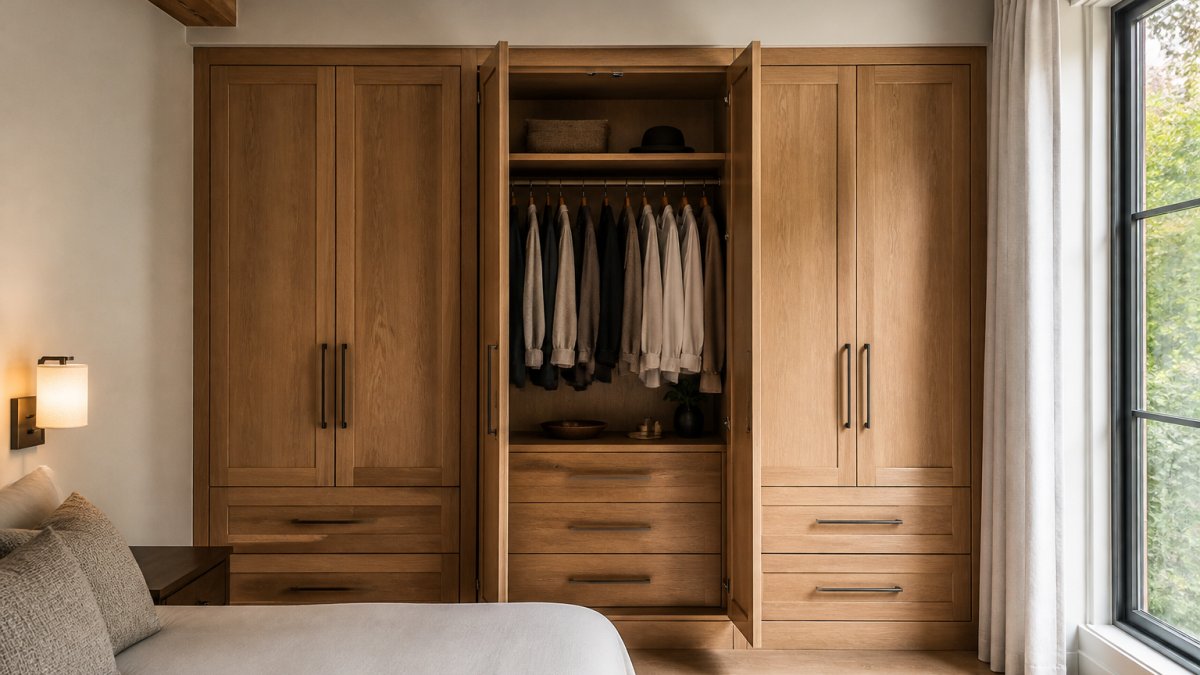
Closet organization often determines whether a small bedroom feels spacious or cramped. Standard closets with a single rod and shelf waste vertical space. Adjustable shelving above the rod creates space for storage boxes, bins, or folded items. Double rods work if you have enough vertical space and most of your clothing is short-sleeve or folded. Shelf dividers prevent stacks from toppling. Hooks on the inside of closet doors hold belts, scarves, or bags.
For renters, adhesive hooks and tension rods offer customization without permanent changes. Don't overstuff closets, if you can't see what you have, you won't wear it. When standard closet solutions don't work, awkward dimensions, angled ceilings, unusual layouts, custom solutions from craftspeople like Richard Gentry Designs create exactly what you need.
Custom Furniture When Standard Solutions Don't Fit
Not every space fits standard furniture dimensions. Some apartments have alcoves, angled ceilings, or architectural quirks that make off-the-shelf solutions impossible. Custom furniture solves this problem directly.
Working with Artisan Craftspeople for Exact Dimensions
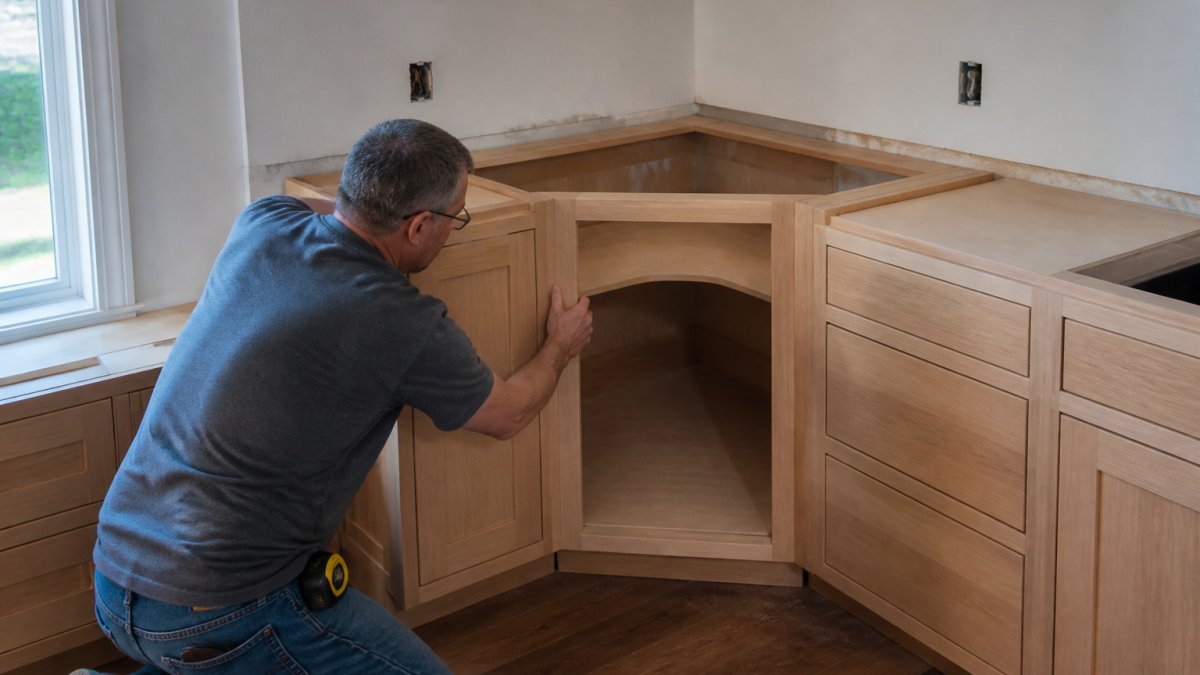
An artisan furniture maker measures your space precisely and builds pieces that fit perfectly. A custom shelf unit that matches your wall dimensions exactly looks intentional and professional. A custom desk that fits your alcove becomes part of the architecture rather than a compromise.
The process starts with detailed measurement and consultation. You discuss your needs, aesthetic preferences, and functional requirements. Quality craftsmanship matters for longevity. Artisan-made furniture built from solid wood with proper joinery lasts decades. Working with someone like Richard Gentry Designs means you're partnering with 25+ years of experience. You're not just buying furniture; you're getting solutions tailored to your specific vision and space.
Budget Considerations: DIY vs. Custom-Made Pieces
DIY storage solutions cost less than custom furniture but require skills and time. If you're comfortable with basic carpentry, tools, and installation, DIY can work. If not, you risk poor results, safety issues, or damage to your space.
Custom-made pieces cost more upfront but deliver precision and quality that DIY rarely matches. A middle ground exists: semi-custom solutions where you choose dimensions, materials, and finishes from predefined options. Consider the total cost over time. A cheap storage solution that fails in two years costs more than a quality piece that lasts ten years.
Safety and Weight Capacity Considerations
Storage furniture that fails creates damage, injury risk, and waste. Understanding weight capacity and installation requirements prevents these problems.
Understanding Weight Limits for Wall-Mounted Storage
Every wall-mounted shelf, organizer, or storage unit has a weight limit. This limit depends on wall construction, hardware quality, and installation. Drywall alone supports maybe 10-15 pounds per anchor. Studs support significantly more, 50-100+ pounds per anchor depending on the hardware.
Installation matters as much as the hardware itself. If you're mounting into studs, use appropriate fasteners. If you're using drywall anchors, use the correct type for your wall thickness and distribute weight across multiple anchors. Never exceed the manufacturer's weight limit. Calculate approximate weight before installation and add a safety margin. If you're uncertain about installation, hire someone.
Renter-Friendly Installation Options
Renters face constraints that homeowners don't. Your lease likely prohibits drilling, wall anchors, or permanent modifications. Tension rods, adhesive strips, and over-the-door organizers work without damaging walls. Freestanding shelving units and storage furniture don't require installation.
For permanent-looking results in a rental, leaning shelves and tall storage units create impact without installation. Document your space before moving in and after moving out. Photographs protect you if your landlord claims you damaged the space.
Sustainable and Eco-Friendly Storage Choices
Storage furniture made from sustainable materials reduces environmental impact without sacrificing quality or function. Solid wood furniture, especially pieces built to last decades, is more sustainable than cheaper alternatives that end up in landfills after a few years.
Look for furniture made from reclaimed or sustainably harvested wood. Avoid particleboard and MDF when possible, these materials are less durable and often contain formaldehyde-based adhesives. Solid wood, plywood, or metal are better choices environmentally and functionally.
Custom furniture from local artisans like Richard Gentry Designs reduces transportation impact compared to mass-produced furniture shipped across the country. When evaluating storage solutions, consider longevity. A piece that lasts 20 years is more sustainable than one that lasts 5 years, even if the durable piece costs more.
Small space storage furniture solutions succeed when they match your actual space and needs. Start with honest measurement, identify what you're storing, and choose pieces that work multiple roles. Vertical storage, multi-functional furniture, and smart organization transform tight spaces into functional homes. When standard solutions don't fit your space's quirks and dimensions, custom furniture from experienced craftspeople like Richard Gentry Designs creates exactly what you need, pieces that fit perfectly and last for years. Get started by measuring your space precisely, then explore solutions that match those dimensions and your specific vision for how you want to live.
Frequently Asked Questions
What are the best small space storage furniture solutions for a studio apartment?
Multi-functional pieces work best in studio apartments. Storage ottomans provide seating, footrests, and hidden storage in one. Wall-mounted shelving and fold-down desks maximize vertical space without eating floor area. Under-bed containers store seasonal items invisibly. The key is choosing furniture that serves at least two purposes. Custom-sized pieces solve awkward corners or angled walls that standard furniture can't fit.
How do I choose multi-functional furniture for small apartments?
Start by listing what you need to store and how you use your space daily. Prioritize pieces that combine storage with a primary function: beds with drawers, ottomans with flip-tops, or desks with shelving. Check weight capacity if wall-mounting anything. Measure your exact dimensions before buying, awkward spaces often need custom solutions. Consider whether you're renting (need removable options) or own (can install permanently). Quality matters in small spaces; flimsy furniture wastes money and space.
What vertical storage ideas work best for small rooms?
Use every inch of wall space. Floor-to-ceiling modular shelving systems adapt to any room shape. Over-the-door organizers add storage without wall installation. Pegboards hold tools, accessories, or lightweight items. Wall-mounted fold-down desks and shelves create workspace without permanent footprints. Floating shelves at varying heights add visual interest while storing books, plants, or decor. Avoid blocking windows or doors. Vertical storage is most effective when items are accessible, place frequently used things at eye level.
How long does custom furniture actually take to make, and when should I start the process?
Custom furniture timelines depend on complexity, materials, and the maker's schedule. Quality artisan pieces typically take 6-12 weeks from design approval to delivery. If you have a home renovation deadline, start the design conversation 3-4 months before you need the piece. Provide exact measurements and your vision early. Work with experienced craftspeople who ask detailed questions about your space, usage, and style. Rushing custom work compromises quality, plan ahead rather than expecting quick turnarounds.
SHOP
This article was written using GrandRanker
Comments