


Modern Farmhouse Furniture Design Trends 2026
Last Updated: October 22, 2026
Quick Summary
Modern farmhouse furniture is the intersection of rustic warmth and contemporary minimalism, pulling from rural heritage while embracing clean, uncluttered design. In 2026, the style emphasizes proportion, material honesty, and repairability, with clean lines paired with organic textures like raw linen, unfinished wood grain, and leather that develops patina.
Modern farmhouse furniture features clean lines, simplified silhouettes, and minimal ornamentation with organic textures layered deliberately.
The 2026 shift prioritizes proportion over ornament, with sofas at 22-24 inch seat depths and dining tables at 36-40 inches wide for four-seat tables.
Avoid dated farmhouse clichés like excessive shiplap, mason jars, and artificially distressed finishes; trust material quality to carry the aesthetic.
Sustainability is now expected, with customers asking about wood sources, low-VOC finishes, and repairability before purchasing.
A well-scaled dining table with clean lines in walnut, oak, or reclaimed chestnut serves as the anchor piece that sets the tone for the entire room.
Table of Contents
What Defines Modern Farmhouse Furniture in 2026
The Balance Between Rustic Charm and Contemporary Finishes
Clean Lines and Organic Textures
Modern Farmhouse Style Trends 2026: What's Evolving
Layered Textures and Mixed Materials
Proportion Over Ornament
Avoiding Dated Farmhouse Clichés
Sustainability as a Buying Criterion
Modern Farmhouse Dining Table Ideas for Your Home
Wide-Plank Wood and Reclaimed Materials
Sizing and Placement for Open Living Spaces
Room-by-Room Dimensions That Actually Work
Budget Tiers and What You Get at Each
Materials, Durability, and Maintenance
Furniture Pieces That Define the Look
Sofas, Sectionals, and Upholstered Seating
Accent Chairs and Side Tables
Color Palettes and Design Accents
Neutral Foundations with Earthy and Green Tones
Getting Started with Your Modern Farmhouse Vision
Frequently Asked Questions
What Defines Modern Farmhouse Furniture in 2026
Modern farmhouse furniture is the intersection of rustic warmth and contemporary minimalism, pulling from rural heritage while embracing clean, uncluttered design.

At Richard Gentry Designs, we've spent over 25 years refining this balance: knowing which elements genuinely serve the space rather than slapping reclaimed wood onto modern frames.
The Balance Between Rustic Charm and Contemporary Finishes
The tension is between authenticity and restraint: too much distressing reads as costume, too much polish loses the warmth.
The key is selective detail: a wide-plank wood table with a simple contemporary base, neutral leather upholstery, organic textures layered deliberately. Each element earns its place through function or visual interest.
Modern farmhouse pieces feature clean lines, smooth silhouettes, and minimal ornamentation.
Clean Lines and Organic Textures
Clean lines are non-negotiable in 2026 modern farmhouse design. Simplified silhouettes let the material quality stand out.
Organic textures layer on top: raw linen, unfinished wood grain, leather that develops patina. These materials feel alive because they age visibly, unlike static veneered surfaces.
Clean geometry paired with tactile, imperfect materials is what separates modern farmhouse from pure rustic or pure contemporary design.
Modern Farmhouse Style Trends 2026: What's Evolving
The modern farmhouse aesthetic has shifted noticeably in the past 18 months. Maximalism is over; layered textures now mean intentional composition, not visual noise. Earthy tones remain foundational, but the palette has narrowed to greens and warm neutrals.
HomeDezign
What's different in 2026 is how those shifts show up in real homes: proportion, material honesty, and sourcing.
Layered Textures and Mixed Materials
Layering textures keeps modern farmhouse spaces from feeling cold. The trick is coherence: every texture should connect to the overall palette and mood.
Wood is the anchor: walnut, oak, ash, and chestnut each bring different warmth and grain character.
Performance fabrics are now acceptable in this style; high-quality performance linen and leather alternatives mean families with kids or pets don't have to choose between durability and design.
Proportion Over Ornament
The most visible 2026 shift is proportion. Pieces are getting lower and wider, but not oversized: sofa seat depths of 22-24 inches and seat heights around 18-19 inches read as current, while deep, overstuffed silhouettes feel dated. Dining tables hold at 30 inches high but trend narrower, 36-40 inches for four-seat tables.
Legs and bases are simplifying: turned legs give way to tapered or straight square legs, and aprons get thinner, so furniture looks lighter without losing visual weight where it matters.
Avoiding Dated Farmhouse Clichés
The biggest mistake is confusing modern farmhouse with farmhouse maximalism: shiplap everywhere, mason jars, galvanized metal on every surface, distressed finishes that look artificially aged rather than genuinely worn.
Modern farmhouse in 2026 is quieter, trusting material quality to carry the aesthetic. A room with three really good pieces (a substantial dining table, quality upholstered seating, thoughtful lighting) outperforms one stuffed with farmhouse-themed accessories.
A practical do-and-don't list:
Do let one material repeat through the room (walnut table, walnut side table, walnut frame) so the eye has a through-line.
Don't mix more than two wood tones in a single sightline; three or more reads as collected rather than designed.
Do use real reclaimed wood where you can afford it, and honest new wood where you can't.
Sustainability as a Buying Criterion
Sustainability has moved from aspirational to expected. Customers ask about wood sources, finishes, and durability. Reclaimed materials aren't just aesthetic choices anymore; they're statements about environmental responsibility. According to the Sustainable Furnishings Council, reclaimed and responsibly sourced wood reduces environmental impact while delivering character new lumber can't replicate.
Ask three questions before you buy: Where was the wood sourced? Is the finish low-VOC? Can the piece be repaired rather than replaced? A table with a repairable finish and re-tightenable joinery will outlast one that's glued and veneered, and that longevity is the most credible sustainability claim a piece can make.
Key Takeaway The 2026 evolution isn't a new color or a new accessory. It's a shift toward proportion, material honesty, and repairability. Buy fewer pieces, buy them well, and let the materials do the talking.
Modern Farmhouse Dining Table Ideas for Your Home
The dining table is the anchor piece in modern farmhouse design, setting the tone for the entire room.
Wide-Plank Wood and Reclaimed Materials
Wide-plank wood creates visual impact: a 12-16 inch plank width reads as substantial and intentional, and the grain patterns become design elements rather than surface texture.
Reclaimed wood carries history. According to the Sustainable Furnishings Council, reclaimed wood reduces environmental impact while delivering character new lumber can't replicate.
At Richard Gentry Designs, we work with both new and reclaimed materials depending on the project.
Sizing and Placement for Open Living Spaces
Custom sizing is where modern farmhouse dining works best; standard tables don't account for your space's specific dimensions, while a custom table fits proportionally with adequate clearance and visual balance.
For open living spaces, a 36-48 inch width is typical for farmhouse tables, with lengths of 60-96 inches depending on seating.
Placement matters: tables positioned to define the dining zone and create natural traffic flow feel more intentional than ones placed for visual symmetry alone.
Room-by-Room Dimensions That Actually Work
Generic sizing advice falls apart in real rooms. Here are working dimensions by space type, with the clearances that keep a room functional.
Small dining room (10x10 ft or smaller): 36-42 inch wide table, 60-72 inches long, seats four to six. Leave 36 inches of clearance from table edge to wall or furniture on all sides; 42 inches if chairs will be pushed back and walked behind.
Open-plan great room (12x16 ft dining zone): 40-44 inch wide table, 72-84 inches long, seats six to eight. Use a rug to define the zone; the rug should extend 24 inches beyond the table edge on all sides so chairs stay on it when pulled out.
Long narrow space (10x14 ft): 36 inch wide table, 84-96 inches long, seats eight. Keep the long axis parallel to the room's long wall to preserve traffic flow.
Seating math is simple: allow 24 inches of table edge per person. A 72-inch table seats three per long side; a 96-inch table seats four per long side. Add 12-18 inches between chair backs and any wall or counter behind them.
Budget Tiers and What You Get at Each
Price context is where most trend articles stop short. Here's a realistic tiering for a modern farmhouse dining table, based on what the construction actually delivers.
Entry tier (roughly $800-$1,800): Production tables in solid wood tops with veneered or engineered bases. Expect standard 60-72 inch lengths, limited finish options, and joinery that isn't designed to be repaired. Fine for a first home or a rental; plan on replacing rather than refinishing.
Mid tier (roughly $1,800-$3,500): Solid wood throughout, wider plank tops, and some custom sizing. This is where our Real Walnut Farm Table ($2,850) and 1800's Chestnut Farm Table ($2,500) sit. You get material honesty and a finish that can be repaired, which is the biggest longevity jump in the category.
Custom tier (roughly $3,500-$6,000+): Full custom dimensions, book-matched or character-grade tops, and joinery built for decades of use. Our Artisan Dining Table ($5,400) and Walnut Dining Table with Ebony Accents ($5,500) are examples. At this tier you're paying for fit to your room and a piece that can be handed down.
Materials, Durability, and Maintenance
A dining table takes more daily abuse than any other piece in the house. Match the material to how you actually live.
Walnut: Dense and stable, with a warm brown tone that darkens slightly over time. Takes a hardwax oil or lacquer finish well. Wipe with a damp cloth; re-oil every 12-24 months if oil-finished. Best for households that want a statement grain and will accept visible patina.
Oak: Harder and more dent-resistant than walnut, with a more open grain. Excellent for families with kids. Same care routine; a matte finish hides scratches better than gloss.
Chestnut (reclaimed): Softer than oak, so it dents more readily, but the reclaimed character means small marks blend in. Best for households that want history and don't mind a lived-in surface.
For upholstered dining chairs, performance fabric is the practical choice for daily use; natural linen looks better but stains permanently. Leather seats are the middle path, they patina rather than stain.
Pro Tip Before you order, tape the table's footprint on the floor with painter's tape and live with it for a week. It's the cheapest way to catch a sizing mistake before the piece is built.
Furniture Pieces That Define the Look
Modern farmhouse succeeds or fails based on the quality of core pieces. You don't need many items, just the right ones, well-made and properly proportioned.
Sofas, Sectionals, and Upholstered Seating
Upholstered seating anchors the living area.
Sectionals work well in modern farmhouse spaces if they're proportioned correctly. An oversized sectional can overwhelm a room. A well-scaled sectional with clean lines becomes the natural gathering point.
Layered seating, a sofa plus accent chairs, creates depth. Accent chairs in complementary materials (leather, linen, or woven fabric) add visual interest without disrupting the cohesive aesthetic.
Accent Chairs and Side Tables
Accent chairs should feel purposeful, not decorative.
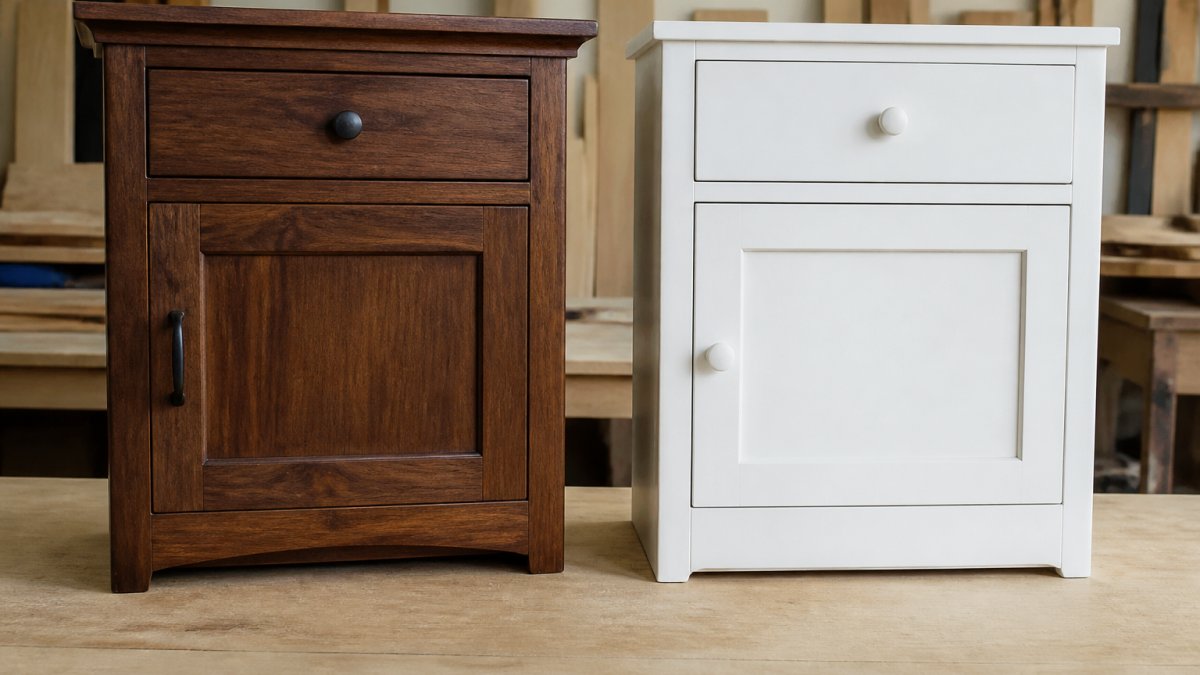
Side tables complete a room. A simple wooden table with clean lines, or a metal-frame table with a wood top, provides surface space without visual clutter.
Color Palettes and Design Accents
Neutral Foundations with Earthy and Green Tones
Modern farmhouse color palettes are restrained. The foundation is neutral: whites, creams, warm grays, and soft beiges.
Earthy tones layer in naturally. Warm wood tones (walnut, oak, chestnut) provide depth, and leather in cognac or saddle tones adds richness.
Green accents have become standard in 2026 modern farmhouse design.
Avoid high-contrast color schemes. Modern farmhouse works best when the palette is unified and calm; pops of color feel out of place.
Getting Started with Your Modern Farmhouse Vision
The process starts with clarity about what you actually want.
Define your priorities: statement pieces or a cohesive background? Existing furniture or starting fresh?
Work with someone who understands both the aesthetic and your specific space. According to the National Association of Home Builders, custom solutions that fit specific spaces increase long-term satisfaction more than standard furniture choices.
Start with one anchor piece, typically the dining table or primary sofa, and build around it.
Richard Gentry Designs specializes in exactly this process.
Modern farmhouse furniture design works when it's built on genuine materials, clean proportions, and intentional restraint.
Element | Modern Farmhouse Approach | Why It Matters |
Wood materials | Wide-plank walnut, oak, chestnut | Grain and color become design features |
Silhouettes | Clean lines, simplified bases | Contemporary proportions prevent dated appearance |
Upholstery | Neutral linen, leather, performance fabric | Durability meets aesthetic cohesion |
Textures | Layered organics (wood, leather, linen) | Visual interest without visual noise |
Color palette | Neutrals + earthy tones + muted green | Calm, unified, timeless |
Sizing | Custom to your space | Proportional fit, intentional placement |
Frequently Asked Questions
Is modern farmhouse furniture still in style in 2026?
Modern farmhouse remains popular because it balances timeless appeal with contemporary design. The 2026 evolution moves away from heavy, overstuffed pieces toward cleaner lines, mixed materials, and sophisticated neutral palettes. The style works well when you prioritize quality craftsmanship and avoid dated clichés like excessive distressing or overly ornate details. Custom pieces that reflect your specific vision and space adapt better to changing preferences than mass-produced farmhouse pieces.
What makes custom farmhouse furniture different from store-bought options?
Custom farmhouse furniture is built to your exact specifications, dimensions, and design vision. Store-bought pieces come in standard sizes that may not fit awkward spaces or match your aesthetic preferences. Artisan-made pieces use higher-quality wood, better joinery, and personalized finishes. With custom work, you control material selection, wood type, stain color, and design details. This ensures durability and a piece that feels genuinely tailored to your home rather than generic.
How do you avoid making modern farmhouse furniture feel dated?
Keep farmhouse elements minimal and intentional. Focus on clean lines, smooth silhouettes, and quality materials rather than heavy distressing or rustic overdoing. Mix reclaimed wood with contemporary finishes and modern accents. Use a neutral color palette with restraint, adding depth through layered textures rather than bold patterns. Choose upholstered seating in performance fabrics for durability and modern appeal. Pair farmhouse pieces with sleek lighting, minimalist decor, and contemporary art to create a balanced, timeless look.
What wood types work best for modern farmhouse dining tables?
Walnut, ash, chestnut, and elm are excellent choices for modern farmhouse tables. Walnut offers rich, warm tones that feel sophisticated; ash provides lighter, more neutral grain; reclaimed chestnut brings historical character with durability; elm adds organic texture. Wide-plank cuts showcase the wood's natural beauty without heavy staining. The finish matters as much as the wood, smooth, contemporary stains work better than heavily distressed or antiqued finishes. Choose wood based on your space's lighting and existing color palette to ensure the table complements your overall design.
SHOP
Comments