


.png)

Luxury Custom Office Desks: Design Your Perfect Workspace
Table of Contents
Why Custom Office Desks Transform Your Workspace
Best Custom Furniture Makers in Nashville: What Sets Artisans Apart
Bespoke Executive Desk Design: Materials, Sizing, and Customization Solid Wood Options and Finishes Custom Dimensions for Awkward Spaces Ergonomic Height and Functionality
Solid Wood Options and Finishes
Custom Dimensions for Awkward Spaces
Ergonomic Height and Functionality
Hand-Made Wood Office Furniture: Craftsmanship That Lasts
Sustainable and Eco-Friendly Material Sourcing
Maintenance and Care for Luxury Wood Desks
The Custom Office Desk Process: Timeline and Investment
Conclusion
Last Updated: August 27, 2026
Why Custom Office Desks Transform Your Workspace
A generic desk gives you a surface to work on. A custom office desk solves everything else. When you commission a bespoke executive desk design tailored to your exact specifications, you're building infrastructure for how you actually work.
Most professionals assume custom desks are purely aesthetic. The real value sits in precision: a desk sized exactly for your space, finished in materials that match your vision, and built with ergonomic heights that prevent chronic back pain. Richard Gentry Designs has spent over 25 years crafting custom office desks that accomplish this, creating pieces clients keep for decades because they were designed for their specific needs from day one.
The workspace transformation happens in layers. First, physical fit: your room's angles, your equipment's dimensions, and your workflow's demands are accommodated without compromise. Second, psychological shift: when you sit at furniture built specifically for you, the environment stops fighting you. You work faster and focus longer. Third, durability: mass-produced desks are engineered for cost optimization; custom pieces are engineered for longevity. That distinction compounds over time.

Best Custom Furniture Makers in Nashville: What Sets Artisans Apart
Not all custom furniture makers operate at the same level. Some treat custom work as a sideline; others have built their entire practice around bespoke design and precision execution.
When evaluating a custom furniture maker, look for three markers of serious craftsmanship. First: long-term specialization. A maker who has focused on custom work for 15, 20, or 25 years has solved problems that newer shops are still discovering. They understand wood movement, grain matching, finishing techniques, and the thousand small decisions that separate a piece lasting three years from one lasting three decades. Second: a portfolio showing range and consistency across different styles. Third: direct client engagement. The best makers don't outsource the design conversation; they ask specific questions about how you work, what your space requires, and what materials resonate with your vision.
Richard Gentry Designs represents this standard. With over 25 years of experience, the practice has developed deep expertise in hand-made wood office furniture that balances aesthetic precision with functional durability. The approach centers on understanding your specific needs and crafting pieces that reflect your workspace requirements and design preferences.
Working with a local maker means you can see work in progress, discuss details in person, and build a relationship extending beyond the transaction. You're collaborating with someone who will spend weeks or months bringing your vision to life.
Bespoke Executive Desk Design: Materials, Sizing, and Customization
A bespoke executive desk design begins with three fundamental decisions: what wood you want, what dimensions you need, and what functionality the piece must deliver.
Solid Wood Options and Finishes
The wood species you choose shapes both the aesthetic and performance of your custom office desk. Different woods have different working properties, grain patterns, and durability characteristics.
Walnut is the most popular choice for luxury custom office desks. It offers rich color depth, fine grain structure, and exceptional workability. The downside: it's relatively soft, showing wear more visibly than harder woods. For daily use, walnut works best if you're comfortable with the patina that develops.
Ash provides a lighter aesthetic with dramatic grain patterns and greater hardness than walnut, resisting surface damage better. Oak delivers maximum durability and is built to withstand heavy use, though it reads traditional more easily than contemporary. Exotic woods like Carpathian elm burl or African satinwood offer distinctive visual impact at premium pricing, as seen in pieces like the Carpathian Elm Burl Desk and African Satinwood Desk.
Finish selection matters as much as wood choice. A matte finish emphasizes grain and delivers a contemporary look. Satin finishes balance protection with visual warmth. High-gloss finishes create formality but require more maintenance.
Custom Dimensions for Awkward Spaces
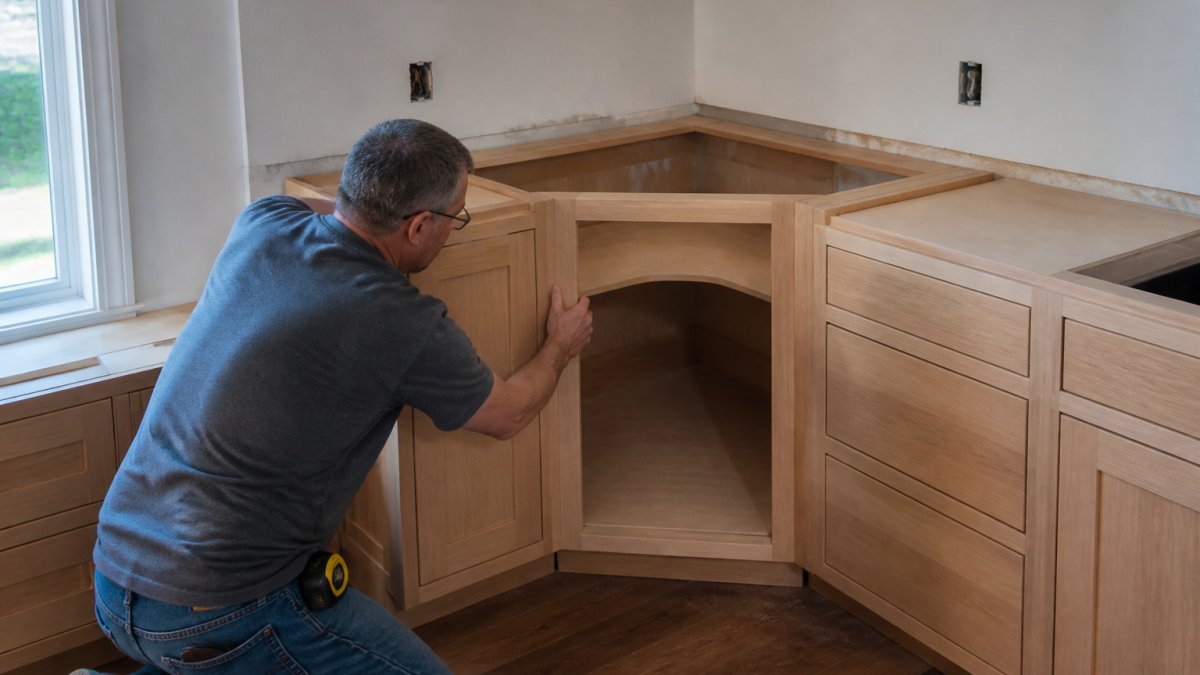
This is where custom office desks solve a problem mass-market furniture cannot. Your space probably doesn't conform to standard dimensions. A custom desk maker measures your space precisely and designs around your constraints. If your corner is 47 inches instead of 48, the desk is 47 inches. If you need a return surface at a specific angle or have a sloped ceiling limiting height, the design accommodates it. This precision eliminates the gap-filling frustration that comes with off-the-shelf pieces.
Ergonomic Height and Functionality
Standard desk height is 30 inches, but this doesn't work for everyone (osha.gov). A custom office desk solves this by building to your specific ergonomic requirements. The right height depends on your arm length, torso length, and work preferences. Some people work better at 28 inches; others need 32 inches. After eight hours a day at a properly-sized desk, your back doesn't hurt (peer-reviewed research).
Functionality extends beyond height. Do you need multiple work surfaces, cable management built into the design, drawers positioned for easy access, or an adjustable keyboard tray? These details should be discussed during design and incorporated into the build.

Hand-Made Wood Office Furniture: Craftsmanship That Lasts
Hand-made wood office furniture operates under a different logic than mass-produced alternatives. Every joint is cut with precision, every finish is applied with attention to grain direction and wood movement, and every detail reflects the maker's expertise.
This approach produces tangible advantages. First, problem-solving: when a maker encounters unexpected grain or a joint needing adjustment, they solve it in real time rather than following a predetermined assembly line. Second, quality control: a person inspecting every piece catches issues automated systems miss. Third, adaptability: if you change your mind about a detail mid-build, a hand-maker can accommodate it.
The durability difference compounds over decades. A hand-made desk built with solid wood and traditional joinery can last 50 years or longer, while a mass-produced desk typically lasts 5 to 10 years before joints fail or veneer delaminates. You're comparing a 10-year furniture cycle against a multi-decade investment.
Richard Gentry Designs builds hand-made wood office furniture using techniques refined over 25 years, understanding wood movement, selecting grain carefully, and executing joinery that holds without mechanical fasteners alone.
Sustainable and Eco-Friendly Material Sourcing
Responsible makers source from sustainable forestry operations or reclaimed sources. Sustainable forestry means harvesting at rates allowing forests to regenerate. Reclaimed wood gives new life to materials that would otherwise be discarded. Both approaches reduce the environmental cost of your custom office desk.
Domestic hardwoods like walnut and ash are generally more sustainable than tropical exotics, requiring less transportation and coming from established managed forests. Ask your maker about sourcing practices: Where does the wood come from? Can they verify sustainable forestry certification? Do they use reclaimed materials when possible?
Maintenance and Care for Luxury Wood Desks
A luxury wood desk requires maintenance, but not as much as many assume. Dust regularly with a soft, dry cloth. For deeper cleaning, use a slightly damp cloth, not wet. Avoid commercial furniture polishes; instead use furniture oil or wax appropriate to your finish type.
Protect the surface from direct sunlight, which fades wood and causes uneven wood movement. Monitor for wood movement, particularly in the first year. Seasonal movement of 1/8 inch across a wide surface is typical. Keep your workspace at 40-50% relative humidity if possible (si.edu). Repair minor damage immediately to prevent moisture entry.
The Custom Office Desk Process: Timeline and Investment
The timeline typically spans 8 to 16 weeks from initial consultation to delivery. The first phase involves design discussion where your maker asks about your space, workflow, aesthetic preferences, and budget. Once design is locked, the maker sources materials and begins construction. Finishing comes last and takes time to ensure quality.
The investment reflects the time, materials, and expertise involved. A custom office desk from a skilled maker typically ranges from $2,500 to $6,500 depending on wood choice, complexity, and size. Richard Gentry Designs offers pieces across this range, from the Artisan Desk in Flame Walnut at $2,850 to the African Satinwood Desk at $5,250.
The comparison to mass-market alternatives is misleading. A $400 desk lasting 5 years costs $80 per year. A $4,000 desk lasting 40 years costs $100 per year without the replacement hassle or accumulated waste of buying four desks over that span.
A custom office desk isn't a luxury purchase for unlimited budgets. It's a practical investment for anyone who spends significant time working at a desk and wants that workspace to support productivity rather than fight it. Richard Gentry Designs creates bespoke executive desk designs that solve the specific problems your space and workflow present. With over 25 years of experience crafting hand-made wood office furniture, the practice delivers custom solutions built to last decades. Start your consultation today and design the workspace you've actually been needing.
Frequently Asked Questions
How long does a custom office desk actually take to make?
The timeline for a custom office desk typically ranges from 8 to 12 weeks, depending on wood selection, complexity of design, and current project load. The process includes initial design consultation, wood sourcing and preparation, construction, finishing, and quality inspection before delivery. Planning ahead ensures your desk arrives when you need it for home renovations or office transitions.
What makes hand-made wood office furniture different from mass-produced desks?
Hand-made wood office furniture is built one piece at a time by skilled artisans who control every detail, from wood selection to final finish. Mass-produced desks use standardized dimensions, lower-grade materials, and assembly-line methods. Custom pieces adapt to your exact space, incorporate your material preferences, and are built to withstand decades of use. The craftsmanship difference shows in joinery, wood grain matching, and the ability to adjust ergonomics precisely to your needs.
Can a custom desk actually fit my awkward corner space?
Yes. Custom desks are built to your exact dimensions, including non-standard angles and corner configurations that off-the-shelf furniture cannot accommodate. During the design consultation, measurements are taken carefully to ensure the desk fits perfectly. This flexibility is one of the core advantages of bespoke executive desk design. Unusual spaces that seem impossible to furnish become opportunities for a piece that looks intentional and maximizes your workspace.
What's the price difference between a custom desk and a retail furniture store option?
Custom desks typically range from $2,500 to $5,250 depending on wood type, size, and design complexity. The Artisan Desk in Flame Walnut starts at $2,850, while premium options like the African Satinwood Desk reach $5,250. Retail furniture stores offer cheaper alternatives, but custom pieces include personalized sizing, superior materials, artisan craftsmanship, and longevity. Many clients find the investment justified when they factor in durability, ergonomic fit, and the fact that a well-made custom desk becomes an heirloom.
SHOP
This article was written using GrandRanker
Comments