


Are Custom Furniture Pieces Worth It for Growing Families?
Last Updated: November 23, 2026
Quick Summary
Custom furniture is worth it for growing families when standard pieces stop fitting the household. Custom work can be sized to your room, planned to adapt as children grow and built from solid wood that lasts long enough to pass down.
Standard pieces are sized for an average room, not your room.
Plan desk and seat heights around children's ages, since a desk sized for a six-year-old will not fit a ten-year-old.
Walnut and white oak resist dents and water well for dining tables and desks.
Conversion varnish and catalyzed lacquer cure hard and suit dining surfaces that see heavy use.
Measure the people using each piece, not only the room, before ordering.
Will your furniture grow with your family?
Richard Gentry Designs builds custom solid wood pieces sized to your home and your household's changing needs.
Table of Contents
Why Growing Families Outgrow Standard Furniture
Most families buy furniture for the family they have today, and within a few years it no longer fits. A toddler's bed becomes a teenager's bed, a dining table seats four when the family has grown to six, and a desk that worked in a bedroom corner now needs to serve homework, art projects and laptop work at once.

At Richard Gentry Designs, we see this pattern again and again. Families come to us after a standard piece has stopped working, not because it broke, but because it was never built to change. Custom furniture lets you plan for that change from the start.
Custom furniture for growing families is built around the way your household actually lives. It can flex in size, adapt to new needs and last long enough to be passed down, the difference between buying for today and buying for the next fifteen years.
Standard pieces are sized for an average room, not your room
Fixed designs rarely adapt when children grow or routines change
Mass-produced finishes often wear badly under daily family use
Design Features That Let Furniture Grow With Your Family
Good family furniture does not try to do everything at once. It is designed around a few features that make change easy: ways to add capacity, shift function and extend the life of each part.
The best features are the ones you can see and use every day. They should feel natural, not like a gimmick. A table that opens for guests or a cabinet that holds more as your belongings grow solves a real problem.
Adjustable and Extendable Components
Think about these questions before ordering:
How many people will sit at the table on a normal day?
Will a desk need to work for a child now and an adult later?
Do you need extra seating only for holidays or visits?
Modular Storage and Convertible Pieces
Custom work can be sized to your space, so you are not forced into a fixed layout.
Choosing Custom Dining Tables for Families
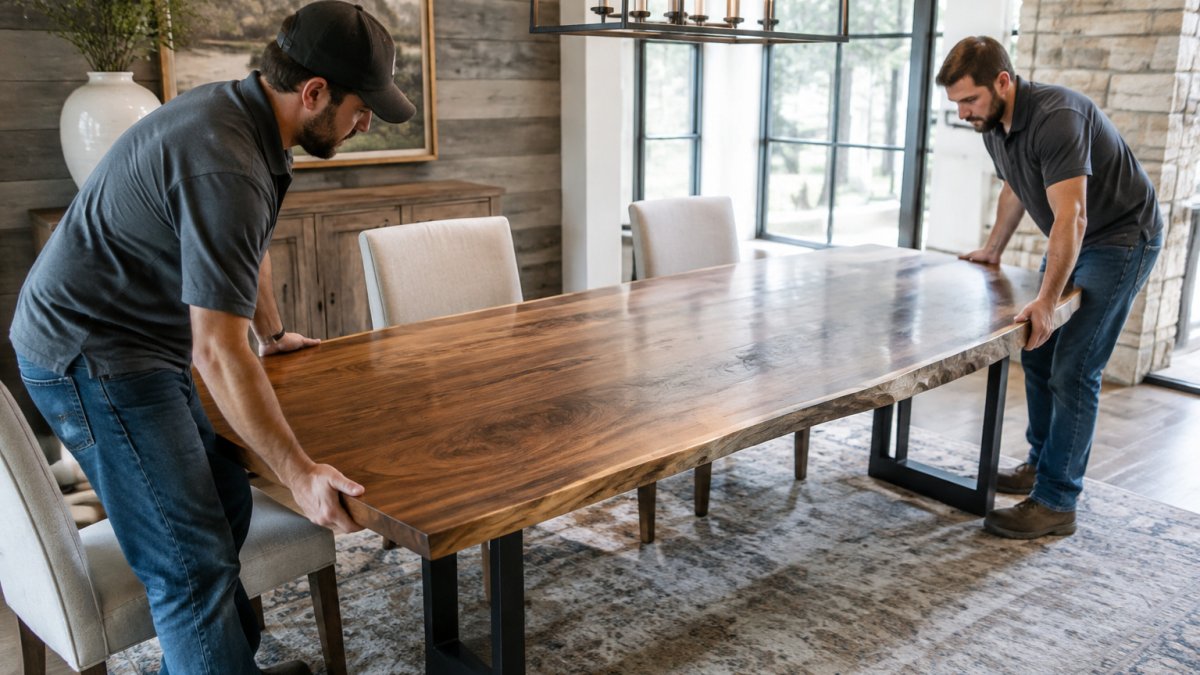
A dining table is often the heart of a family home, seeing homework, breakfast, holiday dinners and long conversations. For families, the right table should seat the people you have now and leave room for the people you expect later.
Start by measuring your room with doorways and walkways in mind, a table that fits on paper can still feel cramped once chairs are pulled out. Then decide how often you need extra seating. You can see the oval walnut dining table we build, or browse our full range of custom dining tables to compare sizes and finishes.
Families should also think about wear. Solid hardwood suits a table that sees daily use. Discuss with us how the top will handle spills, hot dishes and active children before you settle on a finish.
Custom Desks for Children That Adapt to Each Stage
A child's desk should change as the child does. A small desk that suits a young reader may be too low for a middle schooler, and a large desk may overwhelm a first grader. Custom work lets you plan for those shifts from the beginning.
When we design a desk for a growing child, we focus on three things: working height, surface size and storage underneath.
Plan the desk height for the child's current size, with room to adjust later
Leave clear space for books, a laptop and art supplies
Choose drawers or shelves that can hold more as school work grows
Custom Cabinetry for Family Storage
Storage is where families feel the squeeze first. Toys, school papers, games, linens and shoes all compete for space. Built-in cabinetry can turn an awkward wall or corner into useful storage that fits your home exactly.
Entertainment centers and built-ins are a good example. A custom unit can hold media equipment, games and books in one clean wall. Explore our entertainment centers and built-ins to see how cabinetry can serve a living room that works for the whole family.
Custom cabinetry also lets you choose the layout, shelves spaced for tall books or bulky bins, doors placed so children can reach what they need. If you are weighing custom work against mass-produced cabinets, our 2026 guide to custom cabinetry versus mass-produced options walks through the trade-offs.
Selecting Solid Wood and Finishes for Long-Term Use
Furniture that lasts a family's lifetime starts with the material. Solid wood holds up to daily use. The species you choose affects hardness, grain, color and how the piece responds to the knocks and spills of family life, so it helps to understand what each one does before you commit.
Matching Wood Species to Family Use
Hardness is the first thing to weigh when choosing a species. Families with young children generally do best with mid-to-high hardness species on surfaces that see daily abuse, tabletops, desks and chair seats, while softer species work well for vertical surfaces and decorative elements.
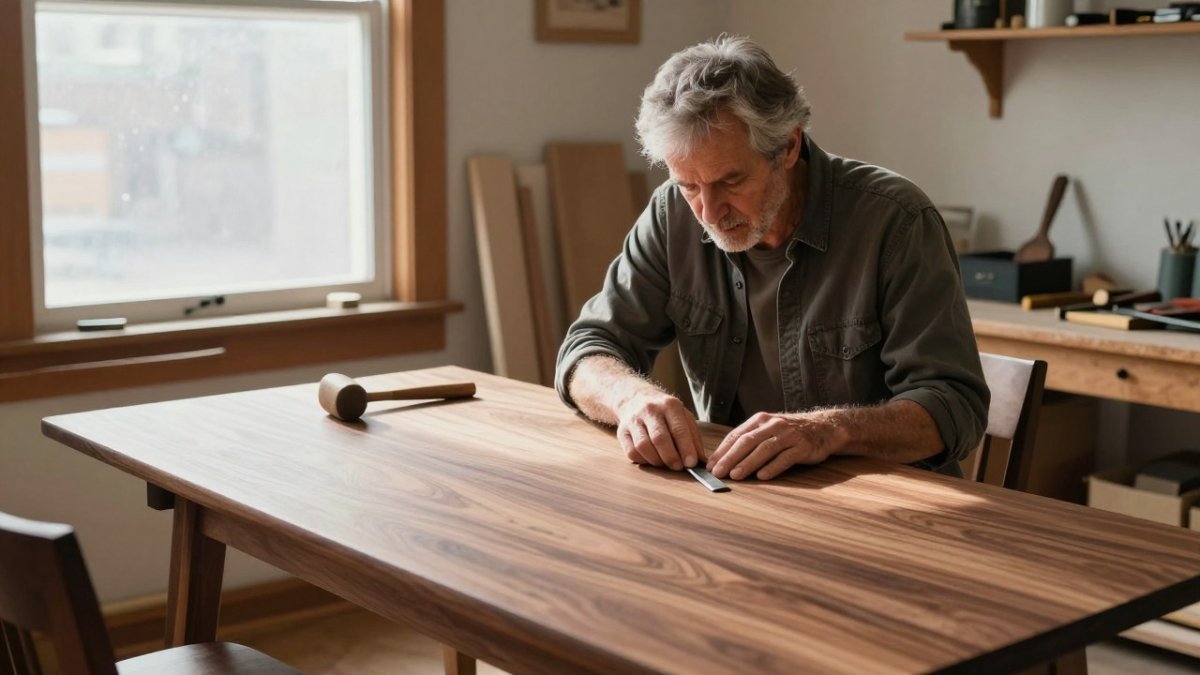
Walnut is dense, resists dents and takes a rich, dark finish that hides everyday marks well. It is a strong choice for dining tables and desks.
White oak is hard, closed-grain and highly water-resistant, which makes it a practical pick for kitchen-adjacent tables and cabinetry.
Cherry is moderately hard and darkens with age, developing a warmer tone over the years, a feature many families come to love.
Maple is hard and light-colored, good for children's desks and play surfaces where a bright, clean look is wanted.
Pine and other softwoods are affordable and easy to work but dent more readily, so they suit beds, shelving and painted pieces more than heavy-use tops.
Understanding Finish Types and What They Do
A finish is not just a color, it is the protective layer that determines how a piece handles spills, heat, sunlight and daily cleaning. The main families of finish behave very differently:
Conversion varnish and catalyzed lacquer cure hard and resist moisture, heat and household chemicals well. They are common on commercial-grade tables and are a strong choice for dining surfaces.
Polyurethane is durable and widely available, but some formulations yellow over time and can be harder to spot-repair.
Oil-and-wax finishes penetrate the wood and leave a natural, tactile surface. They are easy to refresh at home but need more frequent attention and offer less protection against standing water.
Water-based finishes dry clear, have low odor and are a good fit for families who want to minimize solvent exposure during and after production.
Tell us how the piece will actually be used, hot dishes, craft projects, homework, meals, so the design can be matched to the job.
Planning for Long-Term Care
Even the best finish needs care. Most wood finishes benefit from gentle cleaning with a damp cloth and mild soap, and from avoiding prolonged standing water and direct heat. Ask about the specific care routine for your finish before you order.
Solid wood is built to last for years, which is what makes a well-built piece an heirloom rather than a disposable purchase. Our guide to the best wood types for long-lasting furniture compares species in more detail, and we are glad to walk through the trade-offs for your specific rooms and routines.
Planning Your Custom Order Before the Next Growth Spurt
Ordering custom furniture is easiest when you plan ahead, and the most overlooked part of planning is ergonomics. Most guides focus on style and storage, but the furniture a family uses every day has to fit the bodies using it, and those bodies change dramatically between toddlerhood and the teen years. Planning for that change is where custom work earns its keep.
Ergonomics by Age: What Changes and When
Families often replace a child's desk two or three times before high school because the height was never planned for growth. The better approach is to design around the body, not the room.
Toddler and preschool years (roughly ages 2-5): seat height around 10-12 inches and a work surface around 20-22 inches suit most children this age. Low shelving and open bins let children reach and put away their own things.
Early elementary (roughly ages 6-8): seat height around 12-14 inches and a desk surface around 22-24 inches. Feet should rest flat on the floor or a footrest; a dangling foot is a sign the desk is too tall.
Later elementary and middle school (roughly ages 9-12): seat height around 14-16 inches and a surface around 24-28 inches. Homework, projects and a first laptop all compete for the same surface.
Teen years (roughly ages 13-18): adult-sized seating and a surface around 28-30 inches. Posture, screen height and keyboard placement start to matter for long study sessions.
These ranges are general guides, not rules, children vary widely in size. The practical takeaway is that a fixed desk sized for a six-year-old will be uncomfortable by age ten, while a height-adjustable desk or one with a removable riser can serve the same child for a decade.
Planning the Whole Room, Not Just One Piece
Ergonomic planning extends beyond the desk. Dining chairs should let feet reach the floor or a footrest; a bench that works for a toddler may be too low for a teenager.
Bring measurements, photos of your space and a clear idea of how each piece will be used, noting the ages of the children who will use it and the ages they will be in five and ten years. Speaking with us by phone can help you work through the details, not just text messages. Once the design is set, we confirm dimensions, finishes and timing so there are no surprises when the piece arrives.
Watch out: measuring the room without measuring the people is the most common planning mistake. A table that fits the floor plan can still leave a child's feet dangling or a teen hunched over a too-low surface.
Custom furniture for growing families is an investment in how your home will work over time.
The age ranges below summarise the seat and desk heights the article gives for each stage of childhood.
Age range | Seat height | Work surface |
Roughly ages 2-5 | About 10-12 inches | About 20-22 inches |
Roughly ages 6-8 | About 12-14 inches | About 22-24 inches |
Roughly ages 9-12 | About 14-16 inches | About 24-28 inches |
Roughly ages 13-18 | Adult-sized seating | About 28-30 inches |
Best for: Families who want furniture sized to their home and built to change with them. Skip if: You need a single inexpensive piece for a short-term rental or a room you will leave soon.
Frequently Asked Questions
Is custom furniture worth the cost for a growing family?
Custom furniture costs more up front, but it is built to your room, your dimensions and the changes your family will go through. At Richard Gentry Designs, pieces such as the Real Walnut Farm Table at $2,850.00 or the Chestnut Dining Table at $2,950.00 are made to be used for decades rather than replaced every few years. Compare the expected years of use, not just the price tag, when deciding whether custom work makes sense for your household.
What custom dining table size works best for a growing family?
Plan for the largest number of people who will regularly sit at the table, then add room for extra seating during holidays and visits. A custom dining table from Richard Gentry Designs can be sized to your space.
Can custom desks for children grow with them?
Yes. Designing the desk to your child's measurements and planned storage needs helps avoid a desk that is too low or too small after a few years. Richard Gentry Designs builds custom desks, including options such as the Burl Walnut Desk at $3,500.00, sized to fit your room.
How do I make sure custom furniture lasts through years of family use?
Ask the builder to explain the wood species and construction methods before ordering. Good planning communication, including speaking by phone with your maker as well as texting, helps make sure the finished piece matches what you need for years to come.
Comments