


.png)

How to Find a Local Woodworker for Custom Furniture
Table of Contents
Where to Find Local Woodworkers and Artisans
Online directories and portfolios
Interior designers and referrals
Woodworking shows and maker communities
Evaluating a Woodworker's Portfolio and Craftsmanship
What to look for in finished pieces
Understanding joinery and finishing techniques
Questions to Ask a Custom Furniture Maker Before Hiring
Experience and design approach
Materials, timeline, and revisions
Understanding the Custom Furniture Commission Process
Design consultation and specifications
Deposits, contracts, and payment terms
Average Cost of Custom Wood Furniture and What Affects Pricing
Material selection and wood grain choices
Labor, complexity, and customization factors
Red Flags and What to Avoid When Hiring a Woodworker
Communicating Your Design Vision and Managing the Project
Frequently Asked Questions
Last Updated: September 30, 2026
Where to Find Local Woodworkers and Artisans
Learning how to find a local woodworker for custom furniture starts with knowing where to look. The best craftspeople aren't always advertising on billboards. They're in communities, online portfolios, and referral networks where serious furniture buyers search.
Online directories and portfolios
Start your search on platforms built for artisans. Websites like Etsy, Houzz, and Instagram showcase woodworkers' work directly. You see finished pieces, materials used, and design styles in real time. Many craftspeople maintain portfolios on their own websites showing galleries of completed projects.
Search for "custom furniture maker" or "woodworking artisan" in your area. Look beyond the first page of results. The best local makers often rank lower because they don't spend money on advertising. Read reviews carefully. Genuine customer feedback tells you whether the maker communicates well, meets deadlines, and delivers quality.
Google Maps is underrated for this search. Type "woodworker near me" or "custom furniture maker" and filter by reviews and ratings. Call or email makers directly. A quick conversation reveals whether they understand your vision and can handle your specific project.
Interior designers and referrals
Interior designers work with woodworkers constantly. If you're renovating a space, your designer likely has trusted makers they've partnered with for years. Ask your designer for recommendations. They know which makers deliver on time, handle revisions professionally, and create pieces that match their design standards.
Ask friends and family who've commissioned custom furniture. Personal referrals are gold. When someone says "This maker built my dining table and it's perfect," you know they're speaking from real experience. Word-of-mouth recommendations filter out the unreliable makers quickly.
Join local home improvement or design groups on social media. Ask directly: "Who do you recommend for custom wood furniture?" You'll get honest answers from people in your community who've worked with local artisans.
Woodworking shows and maker communities
Woodworking expos and craft fairs put you face-to-face with makers. You can examine their work in person, ask questions, and get a sense of their personality and professionalism. Many makers display at local art fairs and home and garden shows. These events happen regularly in most areas.
Visit open studio events. Many woodworkers host studio tours where you see their workshop, tools, and process. Seeing how someone works tells you a lot about their standards and approach. It also builds trust. You're not hiring a stranger; you're hiring someone you've met.
Join woodworking forums and communities online. Subreddits like r/woodworking connect enthusiasts with makers. Facebook groups focused on furniture and home design often include recommendations. These communities self-police. Bad actors get called out quickly.
Evaluating a Woodworker's Portfolio and Craftsmanship
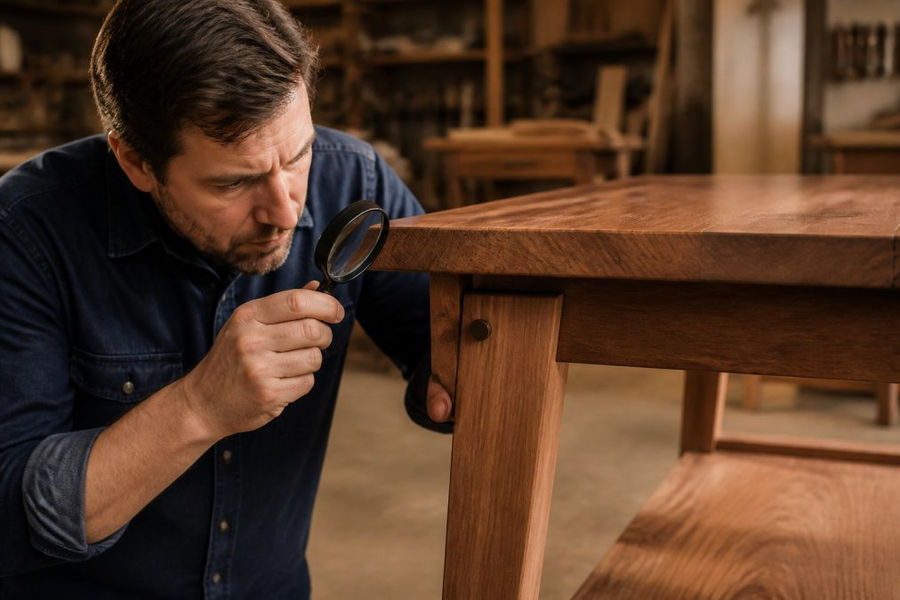
A strong portfolio shows consistency, skill, and range. Don't just look at pretty pictures. Study the details. Good craftsmanship reveals itself in joints, finishes, and how wood is selected and matched.
What to look for in finished pieces
Examine the joinery first. Joints should be tight and invisible or intentionally visible as design elements. Sloppy joinery means the piece won't last. Look at how drawers fit. They should glide smoothly without gaps. Check the edges. Are they sharp or rounded? Does the finish feel smooth or rough?
Look at wood grain matching and color consistency. A maker who selects wood carefully creates pieces that look intentional, not mismatched. Ask about wood species. Different woods have different durability and appearance. A maker who explains their wood choices shows they think about longevity.
Check the finish. Is it even? Are there drips, dust, or uneven application? A quality finish protects the wood and looks professional. Run your hand across the surface. It should feel like glass, not sticky or rough.
Look for consistency across pieces. If the maker's work varies wildly in quality, that's a red flag. Consistency shows they have standards and follow them every time.
Understanding joinery and finishing techniques
Joinery is how pieces of wood connect. The strongest methods are mortise-and-tenon, dovetail, and box joints. These take skill and time. They also last decades. Makers who use these techniques charge more because they invest more labor.
Ask your maker what joinery methods they use. A maker who can explain the difference between joinery types and why they chose specific methods for your project knows their craft. They're not just building; they're engineering.
Finishing is the final step that protects wood and creates the look. Hand-rubbed finishes take longer than spray finishes but create depth and durability. Oil finishes show wood grain beautifully but require maintenance. Lacquer finishes are durable but less forgiving if you want to modify them later.
Ask about finish type and maintenance. A maker who explains how to care for the finished piece shows they want it to last. They're thinking about the piece ten years from now, not just the day you pick it up.
Questions to Ask a Custom Furniture Maker Before Hiring
The right questions reveal whether a maker is right for your project. Ask them before signing anything.
Experience and design approach
Start with experience. How long have they been making custom furniture? What types of pieces do they specialize in? If you want a desk and they mostly build tables, they might still be capable, but specialists are usually safer.
Ask about their design process. Do they work from your sketches? Do they create detailed drawings first? Do they iterate on designs before building?
Materials, timeline, and revisions
Ask about material sourcing. Where do they get their wood? Do they select it personally or work with suppliers? Do they have access to specialty woods? Can they source reclaimed or antique wood if you want it?
Understanding the Custom Furniture Commission Process
Understanding how to find a local woodworker for custom furniture involves a process from idea to finished piece with clear stages. Understanding each one protects you and the maker.
Design consultation and specifications
The first meeting is a consultation. Bring photos, measurements, and a clear description of what you want. The maker will ask questions: Where will the piece go? How will you use it? What's your style? What's your budget?
Deposits, contracts, and payment terms
Most makers require a deposit before starting. This is standard and protects both of you. Typical deposits are 25-50 percent of the total price. The deposit secures your spot in their schedule and covers material costs.
Get a written contract. It should include:
Detailed description of the piece
Materials and finish
Timeline and milestones
Total price and payment schedule
What happens if you want changes
What happens if the maker can't deliver
Delivery or pickup details
Average Cost of Custom Wood Furniture and What Affects Pricing
Custom furniture costs more than mass-produced pieces. You're paying for skill, time, and materials selected for your specific needs.
Material selection and wood grain choices
Wood type drives cost. Walnut, oak, and cherry cost more than pine or poplar. Specialty woods like burl walnut or reclaimed chestnut cost significantly more. Exotic woods cost the most.
Labor, complexity, and customization factors
Labor is the biggest cost driver. A simple rectangular table takes fewer hours than a piece with curved elements, multiple drawers, or intricate joinery. Complex designs cost more.
Red Flags and What to Avoid When Hiring a Woodworker
Some warning signs suggest you should look elsewhere.
A maker who won't provide references is a red flag. Ask for three to five past clients you can contact. If they refuse, that's suspicious.
Communicating Your Design Vision and Managing the Project
Clear communication prevents misunderstandings and keeps the project on track.
Stage | Key Action | Timeline |
Discovery | Research makers, review portfolios | 1-2 weeks |
Consultation | Meet with maker, discuss vision | 1 week |
Design | Maker creates drawings, you approve | 1-2 weeks |
Contract | Sign agreement, pay deposit | 1 week |
Building | Maker constructs piece, sends updates | 8-16 weeks |
Delivery | Inspect piece, arrange pickup or shipping | 1 week |
Frequently Asked Questions
What should I ask a custom furniture maker before hiring them?
Ask about their experience with your furniture type, timeline expectations, material sourcing, revision policy, and payment terms. Request references from past clients and clarify what happens if you're unsatisfied with the final piece. Understand their design process, whether they'll create detailed drawings, how many consultation meetings are included, and whether they work with your own design ideas or primarily develop their own concepts. Ask about their workshop capabilities and whether they can handle custom sizing for unusual spaces.
How much does custom wood furniture typically cost?
Custom wood furniture ranges from $1,400 to $6,500 or more depending on size, wood type, complexity, and craftsmanship. For example, a pair of English Walnut Matching Oval Side Tables is $1,400, while dining tables like the Real Walnut Farm Table are $2,850 and the Ambrosia Dining Table is $6,500. Factors affecting price include hardwood selection, joinery complexity, finishing techniques, and lead time. Handcrafted pieces with premium materials and intricate design work command higher prices than simpler designs in more common woods.
What is the typical lead time for a custom furniture commission?
Most custom furniture commissions take 8-16 weeks from design approval to delivery, though complex pieces or those with specialized materials may take longer. Your project timeline depends on the woodworker's current backlog, design complexity, material sourcing, and finishing requirements. Discuss realistic timelines early, rushing a handcrafted piece often compromises quality. If you have a firm deadline, communicate it upfront so the artisan can assess whether they can accommodate your schedule.
How do I verify a local woodworker's quality and credentials?
Review their portfolio for consistent craftsmanship, clean joinery, and smooth finishes. Ask for references from recent clients and contact them directly. Visit their workshop if possible to see their tools, workspace organization, and work in progress. Check for memberships in woodworking associations or maker communities. Request details about their experience with your specific furniture type and ask to see examples of similar pieces they've completed. Quality artisans are transparent about their methods and happy to discuss their process.
SHOP


Comments