


7 Modern Kitchen Cabinet Trends Shaping Nashville Homes
Last Updated: November 1, 2026
Quick Summary
Modern kitchen cabinets in Nashville are defined by flat-panel slab doors, warm wood tones paired with soft whites, and custom builds that fit out-of-square walls in old homes. Pick one statement element and keep the rest quiet so the kitchen still looks current in a decade.
Flat-panel doors are the biggest driver of a modern look and the easiest profile to keep clean.
Warm walnut or white oak paired with soft white is the safest long-term color combination.
Dark finishes show dust and fingerprints faster than mid-tones, so plan on more frequent wiping.
Stock cabinets assume square walls, which century-old Nashville homes rarely have.
Keep to no more than two trends in one sightline to avoid dating the kitchen.
Table of Contents
Why Nashville Kitchens Are Leaning Modern
Walk through any newer build in East Nashville or a renovated 1920s bungalow in Belmont and you'll notice the same shift: cleaner lines, quieter hardware, and a deliberate move away from ornate detail. Modern kitchen cabinets in Nashville have settled into something practical and rooted, not flashy.
The reason is simple. Nashville's housing stock is a mix of old and new, and modern cabinetry handles both better than most people expect. A slab door in walnut reads contemporary in a new build and surprisingly warm in a Craftsman home. Below, we break down the trends worth your attention and where the trade-offs sit.
Modern Kitchen Cabinet Ideas Built Around Flat-Panel Doors
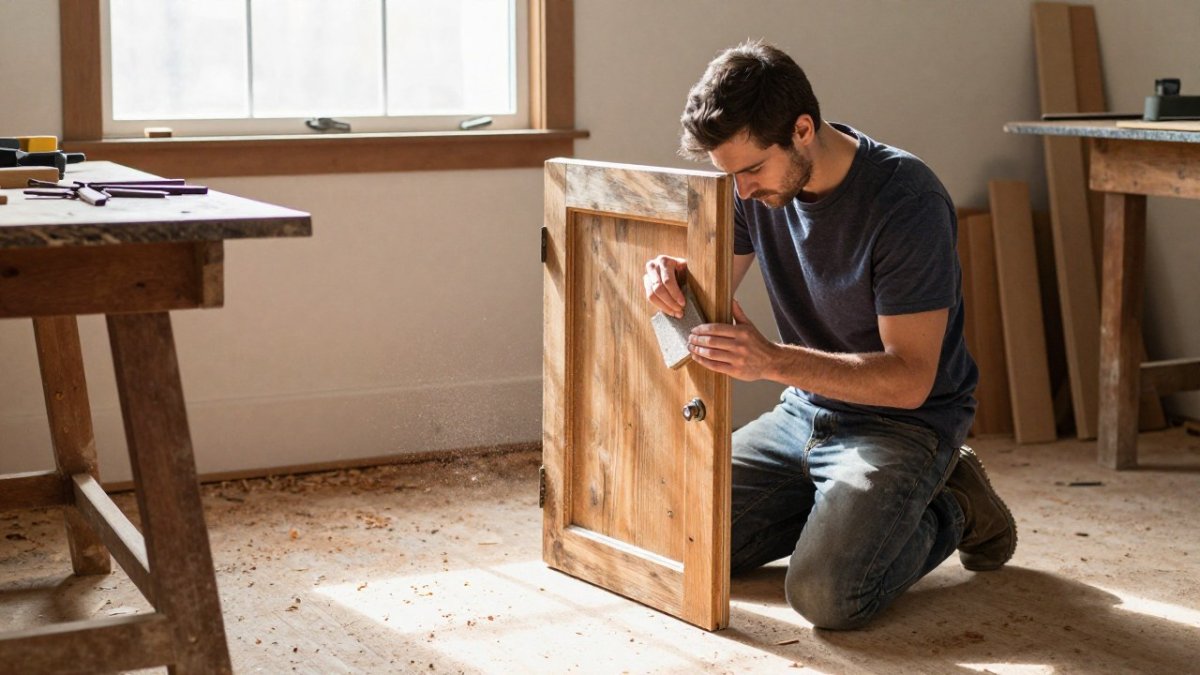
Flat-panel modern kitchen cabinets are the single biggest driver of a modern look right now. A flat-panel door, sometimes called a slab door, is a cabinet front with a smooth, unornamented surface and no raised molding or recessed panel. It is the cleanest profile available and the easiest to keep clean.

What most guides miss is that flat-panel doors live or die on the quality of the material, not the design. A cheap veneered slab telegraphs its budget the moment you open it. If you're weighing door styles against your existing kitchen, our comparison of shaker vs flat-panel vs inset custom kitchen doors covers the trade-offs in more depth.
Kitchen Cabinet Colors Nashville Homeowners Are Asking For
Color is where Nashville kitchens show real personality, and the requests cluster into two clear camps. One leans warm and quiet; the other leans bold and moody. Both work, but they age differently, and that matters when you're spending on custom cabinetry.
Warm Wood Tones and Timeless Whites
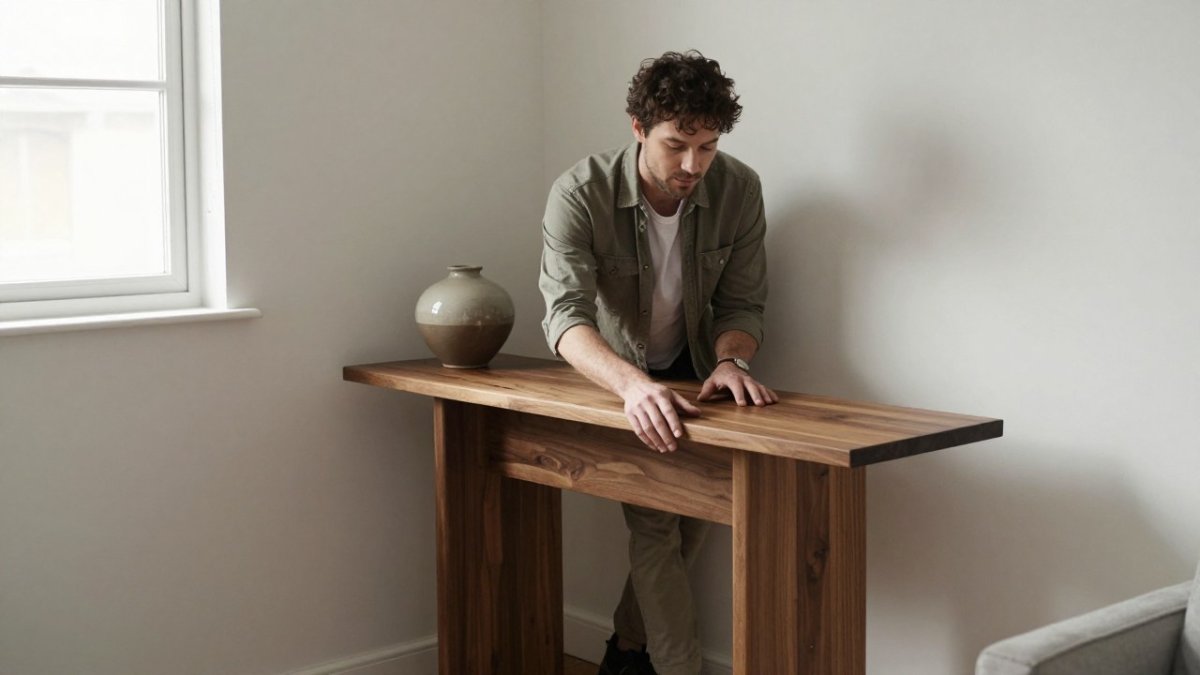
Warm wood tones and soft whites remain the safest long-term bet. Pairing natural walnut or white oak with a soft white is a long-standing, reliable combination. Wood cabinetry in a warm finish reads modern when the door profile is flat and the grain runs vertically. Timeless whites work on perimeter cabinets while wood anchors an island. This pairing suits traditional-style homes and new construction equally, which is why it keeps showing up.
Blue, Green, and Dark Finishes With Satin Bronze Hardware
Muted blue and green finishes are a popular direction in many kitchens. Dark finishes, especially near-black and deep forest green, look striking with satin bronze cabinet hardware and a contrasting light countertop. One honest limitation: dark finishes show dust and fingerprints faster than mid-tones, so plan on more frequent wiping. If satin bronze is your direction, our guide to choosing cabinet hardware for custom kitchens walks through matching finish, scale, and placement.
Custom Kitchen Cabinets That Fit Old Homes and Odd Corners
Stock cabinets assume square walls and standard openings. Old Nashville homes rarely cooperate.
That's not a small detail in a city full of century-old houses. Out-of-square walls, radiator nooks, and chimneys that interrupt a run of cabinetry all demand a made-to-measure approach. A common mistake is ordering standard boxes and filling the gaps with trim; it looks fine for a year and shabby for the next twenty. For the measuring side, our walkthrough on how to measure for custom kitchen cabinetry in awkward corners and our guide to installing corner cabinets in out-of-square walls cover the practical steps.
Kitchen Cabinet Storage Ideas That Earn Their Footprint
Good kitchen cabinet storage ideas are about reach and rhythm, not gadget count. But the storage conversation most guides skip is accessibility, and that is where custom cabinetry earns its keep over stock boxes.
Design Around Reach, Not Around Gadgets
A common pattern in remodeling is to plan storage by appliance count and then discover the everyday items live outside comfortable reach.
That single rule changes the layout. It pushes daily dishes into the drawer stack beside the dishwasher, moves the stand mixer to a lift-up shelf rather than a deep base cabinet, and keeps the step stool in a tall pull-out instead of the back of a closet.
Pull-Outs, Drawers, and the Trade-Offs Nobody Mentions
Tall broom and step-stool cabinets. A 12- to 15-inch-wide tall cabinet with a full-height pull-out keeps cleaning tools off the floor and out of sight.
Aging-in-Place and Inclusive Storage
Accessibility is the angle almost no trend guide covers, and it matters more as homeowners plan to stay in their houses longer. The practical moves are straightforward:
Pro Tip If aging-in-place is a goal, decide it before the boxes are built.
What to Skip
Start with drawer configuration and reach range, then add accessories only where a specific item needs a home.
For the measuring side of awkward layouts, our walkthrough on how to measure for custom kitchen cabinetry in awkward corners and our guide to installing corner cabinets in out-of-square walls cover the practical steps.
What Each Trend Costs and How Long It Lasts
Budget is where trend advice usually gets vague, so here is a straight comparison of the trade-offs. Custom cabinetry pricing depends on material, door style, and complexity, so treat these as planning ranges rather than quotes. The numbers below reflect common patterns for a typical 10-by-10-foot kitchen footprint with roughly 20 linear feet of base and upper cabinetry.
Refacing, Stock, Semi-Custom, and Custom
The first decision is not color or door style; it is which tier of cabinetry you are buying. Each tier changes both the price and what trends you can actually execute.
Tier | What It Is | Typical Cost Signal | What It Limits |
Refacing | Existing boxes stay; new doors, drawer fronts, and veneer | Lowest of the four | Door profiles limited to what fits existing boxes; no layout changes |
Stock | Pre-built sizes in fixed increments | Low to moderate | Odd corners and out-of-square walls need filler; limited finishes |
Semi-custom | Stock boxes with modified sizes and more finishes | Moderate to higher | Some complex corner builds still need field modification |
Custom | Built to actual measurements, any profile and finish | Highest | Timeline and lead time are longer |
Trend-by-Trend Cost and Durability
Trend | Relative Cost | Durability | Maintenance |
Flat-panel doors | Moderate | High with solid wood or quality veneer | Low, easy to wipe |
Warm wood tones | Higher (material-driven) | Very high | Occasional oil or wax |
Timeless whites | Moderate | High | Shows smudges |
Blue and green finishes | Moderate | High | Low |
Dark finishes | Moderate | High | Higher, shows dust |
Custom corner builds | Higher (labor) | Very high | Low |
Customized storage | Moderate to higher | High | Low |
What Actually Changes the Price
Door material. Solid wood and quality veneer cost more than thermofoil or laminate, and they age differently. A cheap veneered slab telegraphs its budget the moment you open it.
Finish type. Painted finishes and stained wood require different prep and cure time; a factory finish generally outlasts a site-applied one.
Complexity. Out-of-square walls, chimney interruptions, and corner builds add labor. Standard boxes plus trim looks fine for a year and shabby for the next twenty.
Hardware. Soft-close slides and hinges, pull-outs, and lift systems add cost per unit but are the first things to fail when specified cheaply.
Humidity, Wear, and Long-Term Value
Kitchen cabinetry lives in a humid, greasy, high-traffic environment, and finishes handle that differently. Painted finishes show chips at edges; stained wood shows scratches but can often be touched up. Dark finishes show dust and fingerprints faster than mid-tones, so plan on more frequent wiping. In a humid climate, specify a finish system rated for kitchen use and avoid unfinished wood on surfaces that see steam.
Watch Out Color trends cycle, but construction quality does not. Spend on the box and the door material first, then choose the finish.
Sustainable and Low-Emission Choices
If you are comparing options before committing, our guide to a Furniture by Steve alternative for cabinetry explains how custom cabinetry pricing, materials, and heirloom-quality construction compare for local homeowners.
Mixing Trends Without Dating Your Kitchen
The trick to combining trends is restraint. Pick one statement element and let everything else stay quiet. If you want green cabinets, keep the hardware simple and the countertop calm. If you want a dramatic dark finish, skip the matching dark backsplash.
A useful rule: no more than two trends in one sightline. Flat-panel doors plus warm wood is a pairing that will look current for a long time. Flat-panel doors plus dark green plus brass plus a bold backsplash is a photograph, not a kitchen you'll still love in a decade. Contrasting details work best when they're isolated.
Planning Cabinetry With a Nashville Woodworker
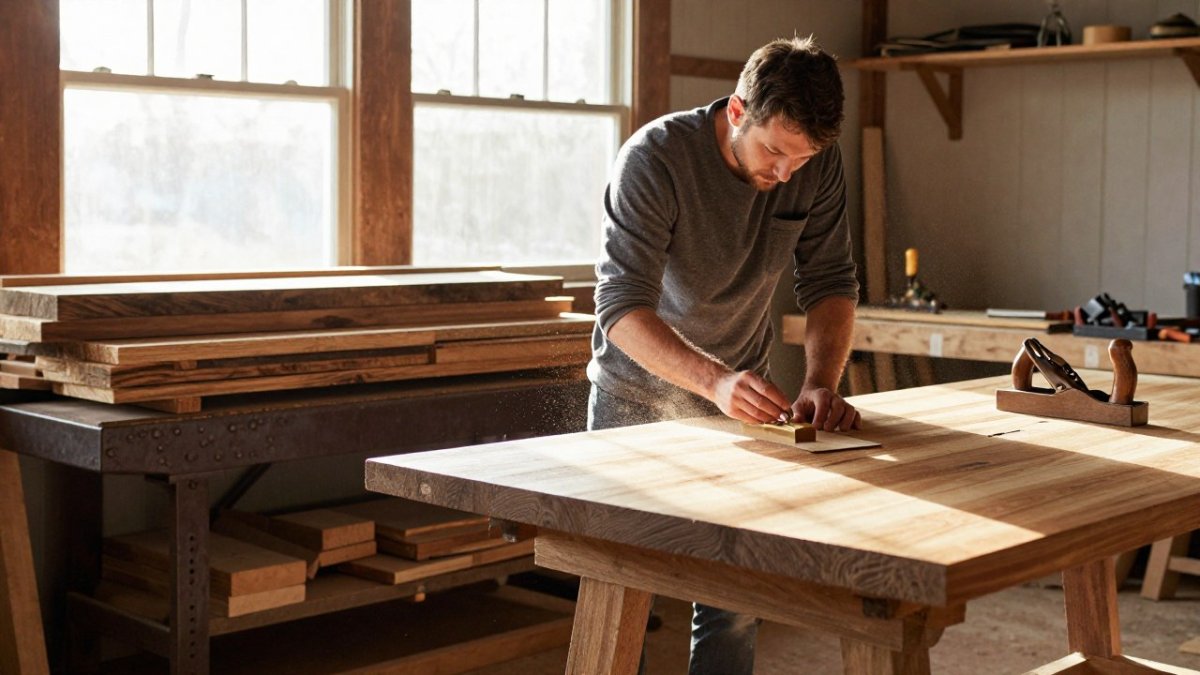
Custom cabinetry is furniture, and it should be built by someone who thinks like a furniture maker. At Richard Gentry Designs, we've spent over 25 years building hand-crafted wood furniture for homes across Middle Tennessee.
If you're comparing options before committing, our guide to a Furniture by Steve alternative for cabinetry explains how custom cabinetry pricing, materials, and heirloom-quality construction compare for Nashville homeowners.
Frequently Asked Questions
Are natural wood kitchen cabinets still in style?
Yes. Warm wood tones are one of the strongest directions in modern kitchen design right now, especially in older Nashville homes where painted flat panels can feel out of place. The key is pairing wood with simpler door profiles and quieter hardware so the grain carries the room instead of competing with ornate trim.
What cabinet colors make a kitchen look modern?
Timeless whites still read as modern when the door profile is flat and the hardware is minimal. Blue and green finishes paired with white uppers are a popular combination, and dark finishes add contrast against light countertops.
Are custom kitchen cabinets worth the investment?
Custom cabinets earn their cost when standard sizes leave gaps, when a home has awkward corners or sloped ceilings, or when you want a specific wood and finish that stock lines do not carry. Off-the-shelf boxes fill with filler panels and wasted space. Custom work is measured to the room, so storage, sightlines, and proportions all match the space instead of the other way around.
How do you choose cabinet finishes that work with existing countertops?
Start with the countertop's undertone, not its color name. Warm wood cabinets sit comfortably under cream or beige stone, while cool gray counters pair better with white or blue cabinetry.
Nashville's best kitchens aren't the trendiest ones. They're the ones built with real materials and measured to the room. If you want cabinetry that fits your space and your vision, Richard Gentry Designs brings over 25 years of artisan woodworking to every piece, from custom cabinetry to hand-built tables like our walnut dining table. Get started with Richard Gentry Designs and build cabinetry that lasts.
Comments